
- All
- Artificial Intelligence
- Aviation
- Aviation & Infrastructure
- Aviation Technology
- Backend Development
- Blockchain
- Business
- Business & Entrepreneurship
- Cleanliness and Hygiene
- Commentary and Opinion
- Compilers
- Data Science
- Distributed Systems
- Engineering Leadership
- Future Trends
- Game Development
- Infrastructure
- Innovation
- Opinion & Analysis
- Philippine Development
- Philippine Economy
- Programming
- Programming Languages
- Public Services
- Public-Private Partnership
- Society and Culture
- Software Architecture
- Software Engineering & Development
- System Design
- Technology
- Transportation
- Urban Development

Introducing Gamepenter: A Humble Game Engine Project That Kept Growing
 June 6, 2026
 Gamepenter began as a 2017 university project and has since evolved through Java, Python, and now C++ into a serious Windows-first game engine effort with broader ambitions. In this introduction, the article explains what makes engine development uniquely complex, then grounds Gamepenter in that reality by showing what already exists today: an SDL3-based runtime, ECS-driven world model, Python scripting, 2D physics, scene loading, packaging workflows, sample projects, and early tools like the asset editor. Rather than overselling the project, the piece takes an honest look at its current architecture, boot flow, and long-term direction toward a more complete Gamepenter Studio vision. If you want a practical, transparent view of how an independent engine grows from concept into real software, this article offers both the technical context and the story behind that progression.
Read More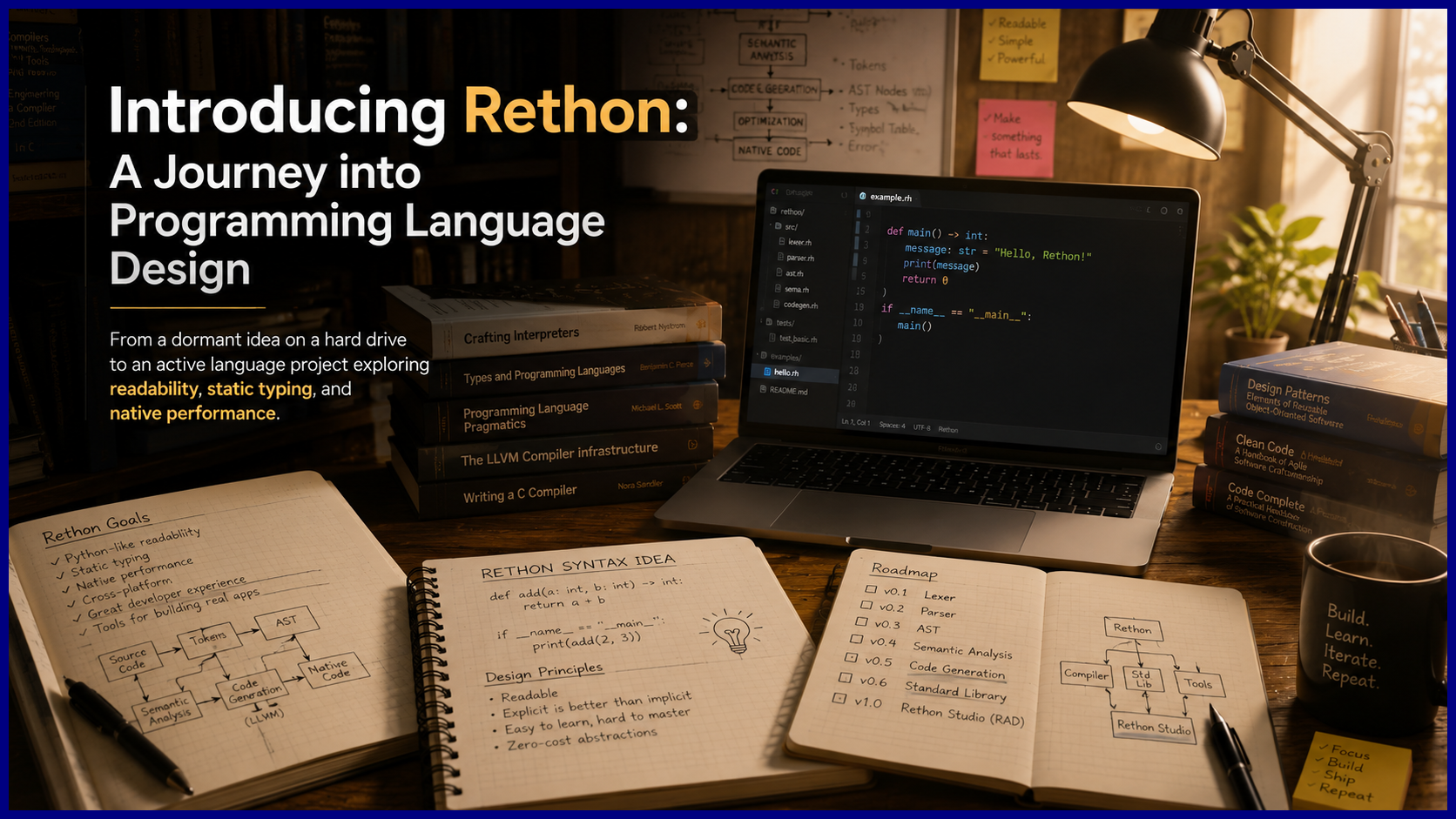
Introducing Rethon: A Journey into Programming Language Design
June 4, 2026 Rethon is an ambitious programming language project exploring a compelling question: can a language preserve much of Python’s readability while embracing static typing, Ahead-of-Time compilation, and native performance? This article introduces the origins of Rethon, from its early Reticulated Python concept to its current direction as a long-term language and compiler initiative built around LLVM. It outlines the project’s design philosophy, syntax direction, type system goals, compiler architecture, and plans for native ecosystem interoperability through C and C++ integration. More than a pitch for yet another language, this is a thoughtful look at language design, engineering tradeoffs, and the challenge of balancing clarity with performance. If you are interested in compilers, programming language design, LLVM, or the future of developer tooling, this article offers a grounded introduction to what Rethon is trying to become.
Read More
Modular Monoliths: The Middle Ground Between Monoliths and Microservices
June 3, 2026 Modular monoliths offer a practical middle ground between traditional monoliths and microservices. They preserve the simplicity of single-unit deployment while enforcing clear internal boundaries, making them easier to build, maintain, and evolve until distributed complexity is truly justified.
Read More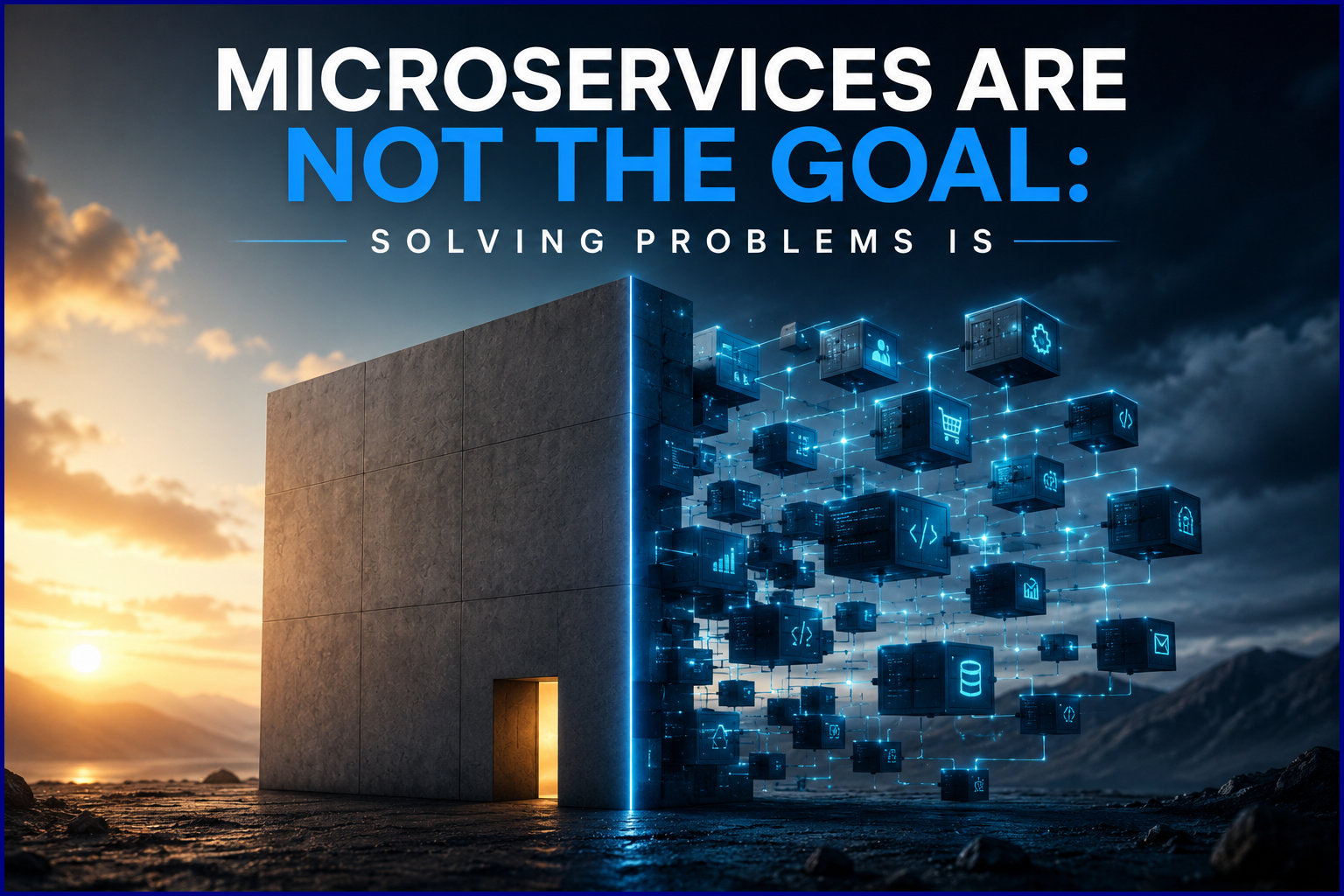
Microservices Are Not the Goal: Solving Problems Is
May 29, 2026 Microservices can be the right architectural choice, but many organizations adopt them long before scale, team structure, or operational maturity justify the cost. This article examines the trade-offs, the distributed monolith trap, and why a modular monolith is often the more disciplined solution.
Read More
When Regulation Becomes a Roadblock: Are We Truly Supporting Local Businesses?
May 25, 2026 The DTI’s withdrawn advertising permit draft sparked public concern, but it also revealed a broader issue: many MSMEs feel that permits, compliance costs, and administrative hurdles continue to make entrepreneurship in the Philippines harder than it should be. If supporting local businesses is a real priority, that support must go beyond slogans and include a more practical, competitive, and growth-friendly business environment.
Read More
Blockchain in 2026: From Speculation to Real Utility
March 26, 2026 In 2026, blockchain is no longer about hype, tokens, or speculation. It is about real utility, trust, and systems that solve actual problems. In this article, I share my thoughts on where blockchain is heading, why projects like Kooaia Network still matter, and why now may be the right time to revisit both Blockchain and Artificial Intelligence with a more practical and purposeful approach.
Read More
The State of Toilets in the Philippines: A Hidden Crisis in Cleanliness and Maintenance
Cleanliness and Hygiene Commentary and Opinion Public Services Society and Culture Urban Development
November 12, 2025 Public toilets in the Philippines often reflect neglect and poor maintenance, even in private hospitals and major malls. Wet floors, broken doors, missing locks, dirty changing tables, and empty tissue holders reveal deeper issues in discipline and accountability. This article examines the state of public restrooms and proposes a solution through a specialized toilet hygiene and maintenance service.
Read More
Philippine Airlines Calls for a Unified National Airport Masterplan
November 12, 2025 Philippine Airlines is calling for a Unified National Airport Masterplan that would guide all airport developments under one national strategy. The plan aims to harmonize investments, improve efficiency, and create a cohesive vision for Philippine aviation growth.
Read More
Philippines to Privatize Nine Regional Airports: Inside DOTr’s New PPP Strategy
October 17, 2025 The Department of Transportation (DOTr) is moving forward with an ambitious plan to bundle nine regional airports under new Public-Private Partnership (PPP) agreements. Building on the success of Mactan-Cebu, Clark, and NAIA’s recent privatization, this initiative aims to modernize regional gateways through private-sector efficiency while keeping government ownership intact. If done right, it could mark a turning point for Philippine aviation, bringing world-class standards to airports across the country.
Read More
The Rise of Everyday AI: How Artificial Intelligence Became Invisible but Indispensable
October 17, 2025 Artificial Intelligence isn’t just powering the future; it’s already quietly shaping our present. From the way our phones predict our habits to the routes our cars choose before we even ask, AI has woven itself into daily life so seamlessly that we no longer see it. The world is busy talking about AI as a revolution, but the real transformation is a silent and invisible layer of intelligence running beneath everything we do. This article explores how AI became both invisible and indispensable, the paradoxes it created, and why its greatest power lies not in what it shows, but in what it hides.
Read More
The Future of Real Estate: How Technology Is Redefining the Way We Buy, Sell, and Invest
October 16, 2025 Real estate is shifting to a data-driven era. AI valuation, tokenized ownership, green and sensor-rich buildings, plus immersive, AI-first platforms are redefining how people buy, sell, and invest. This piece maps the trends, risks, and opportunities, and what they mean for buyers, developers, brokers, and regulators.
Read More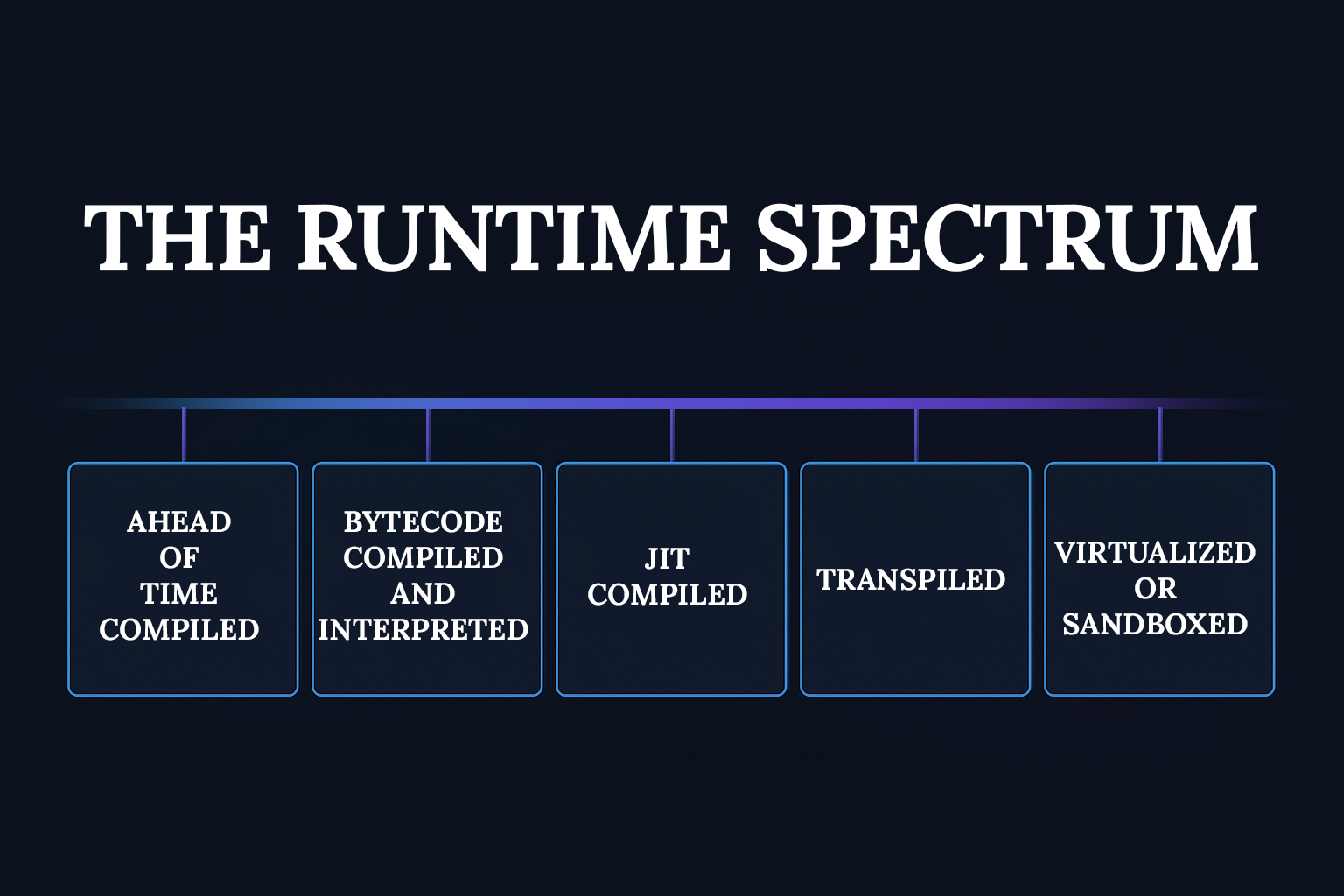
The Age of Language Runtimes: Why Everything Compiles and Interprets
October 15, 2025 For decades, developers argued about whether a programming language was compiled or interpreted. Today, that question doesn’t even make sense anymore.We’ve entered the age of language runtimes, a world where your code might be compiled, interpreted, JIT-compiled, optimized at runtime, cached, sandboxed, or even executed inside another runtime (inside another runtime).
Read More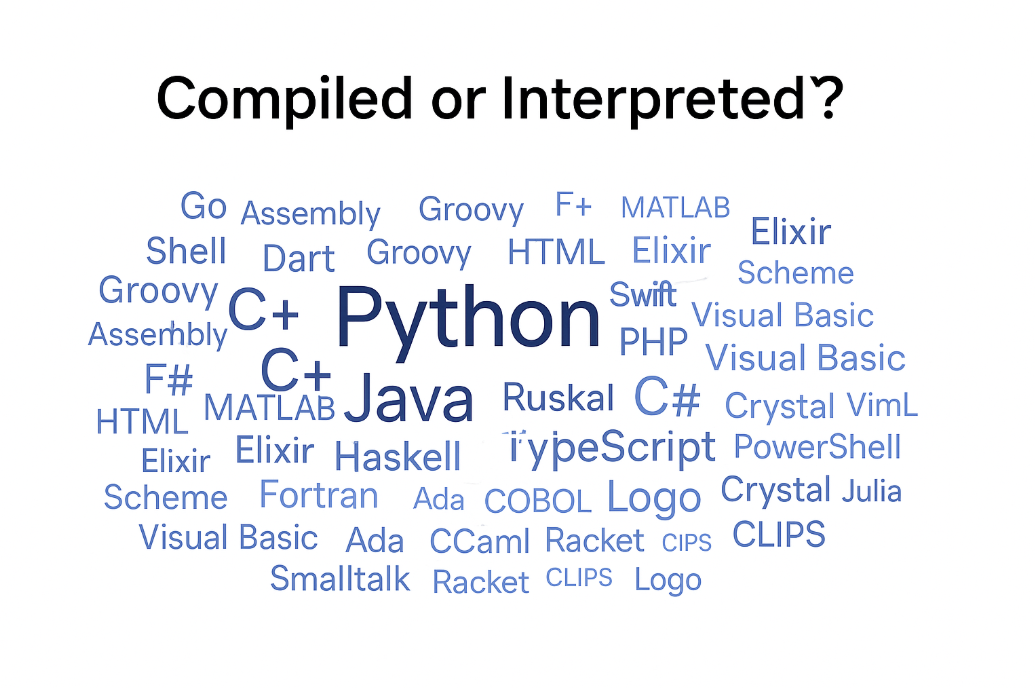
Beyond Compiled vs Interpreted: How Programming Languages Evolved Beyond Two Categories
October 14, 2025 For decades, programming languages were simply classified as compiled or interpreted. Today, that line has completely blurred. From Java’s bytecode and virtual machines to modern JIT and AOT compilers, languages now live on a spectrum that blends performance, flexibility, and portability. Here’s how this evolution reshaped the way code runs in the modern world.
Read More
Clark International Airport: The Philippines’ Next World-Class Gateway
October 10, 2025 Clark International Airport (CRK) in Pampanga is rapidly transforming into one of Southeast Asia’s most modern and forward-thinking aviation hubs. Once seen as an alternative to Manila’s overcrowded NAIA, Clark is now rising as a premier gateway defined by stunning architecture, smart infrastructure, and a bold vision to make travel smoother for everyone.
Read More
The Rise of Smart Airports
October 9, 2025 Airports are no longer just terminals and runways. They are evolving into complex, intelligent ecosystems powered by data, automation, and artificial intelligence. Among all airport zones, the airside, which includes runways, taxiways, aprons, and associated ground operations, presents some of the most critical challenges and opportunities for AI transformation.
Read More
Foreign Object Debris Detection in 2025: Why It Matters More Than Ever
October 8, 2025 Foreign Object Debris may look small, such as a stray bolt, a rock, a piece of tyre fragment, or even a bird carcass left after a strike, but in aviation, even the smallest object can lead to serious consequences. From engine damage to costly flight delays, Foreign Object Debris remains one of the most persistent and underestimated safety risks in airport operations.
Read More