
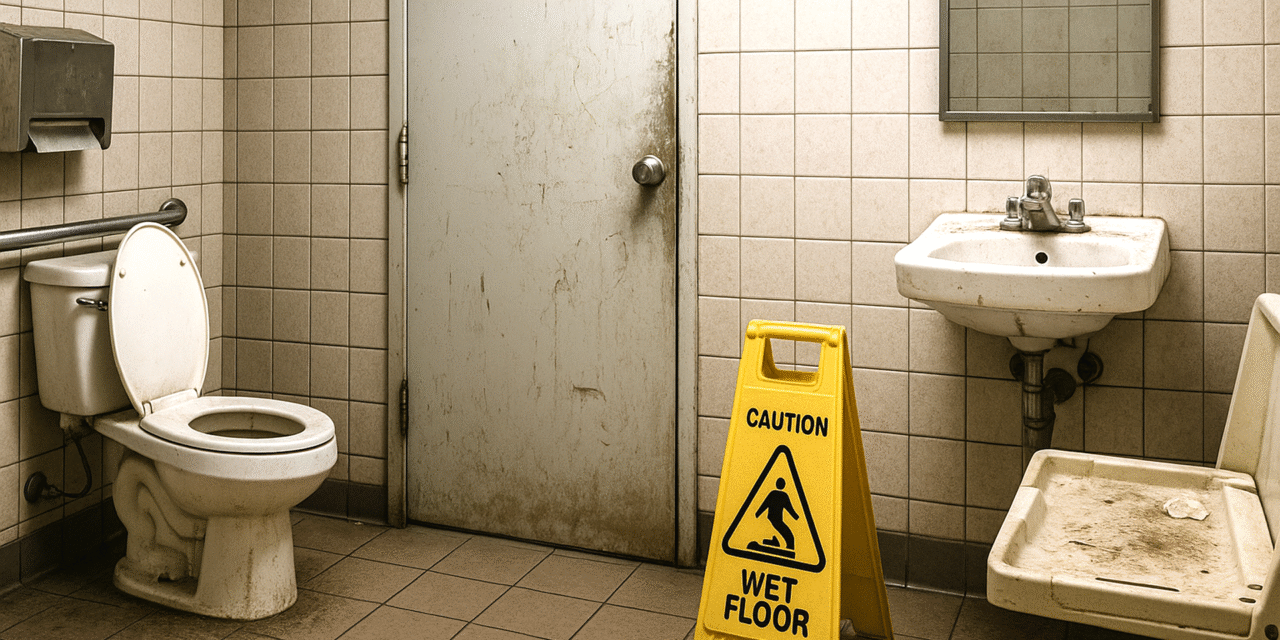
In every modern society, public toilets are more than just facilities. They reflect culture, discipline, and respect for others.
When people travel abroad, one of the first things they notice is how clean and well-maintained public restrooms are. Yet in the Philippines, even in places that look world-class from the outside, many restrooms remain in poor condition. This article takes a closer look at the real state of public toilets in the country, from hospitals to malls, and explores why something so basic continues to be neglected.
1. Even Prestigious Institutions Are Not Exempt
It is one thing to see neglected toilets in public markets or roadside terminals. But it is another to walk into a private tertiary hospital, a place where hygiene should be sacred, and still find broken urinals, leaking flushes, wet floors, and damp tiles that have been left unfixed for months.
I regularly visit one of the most prestigious private tertiary hospitals in our province. Despite its modern facilities and expensive consultation fees, I continue to encounter the same broken urinal, the same malfunctioning flush handle, the same foul odor, and the same wet floor I noticed months ago.
If a hospital cannot maintain the cleanliness of its toilets, the most basic hygiene facility, how can we trust its infection control inside operating rooms?
2. The Mall Mirage: Shiny on the Outside, Smelly on the Inside
Even our shopping malls, which many Filipinos take pride in, suffer from the same neglect. Whether you are in a small town mall or a major supermall in Metro Manila, chances are you have walked into a restroom that smelled stale, had wet floors, or had toilets that did not flush properly.
Some malls employ attendants assigned to monitor restrooms, yet the problem persists. Many of these attendants are undertrained or lack proper cleaning materials. Toilets are treated as an afterthought when in reality, they are one of the clearest reflections of how an establishment values its visitors.
3. The Forgotten Details: Doors, Sinks, Faucets, and the Great Tissue Mystery
Beyond broken urinals and smelly stalls, many restrooms in the Philippines also suffer from poorly maintained doors, sinks, faucets, wet floors, and, most of the time, no tissue. Let us be honest, it has almost become a national joke. You walk into a mall or hospital restroom, and what do you see? The tissue holder is empty, if not always, then almost every time.
What is the reason behind this?
Is tissue paper that expensive?
Will it make an establishment poor if they buy in bulk and refill it regularly?
Toilets are among the most frequently used facilities in any building, and yet something as simple as keeping tissue stocked and floors dry seems to be a luxury. The irony is, these are places that spend thousands on branding, advertising, or LED walls but cannot keep a few rolls of tissue or a clean, dry floor in their restrooms.
And that is not the only issue. Many cubicles still have:
- Doors that do not close properly, forcing users to hold them while inside
- Missing or broken locks, leaving people anxious about being walked in on
- Sinks with no water pressure, rusted faucets, or sensor taps that do not work
- Clogged drains, wet floors, and grimy sink counters that clearly have not been scrubbed for days
- Broken or dirty diaper changing tables that parents are afraid to use
These small but essential fixtures, such as doors, sinks, faucets, tissue, and changing tables, represent the very foundation of hygiene and comfort.
If these are neglected, it reflects deeper problems in cleanliness culture, maintenance priorities, and accountability.
4. The Discipline Problem
Beyond management and maintenance, there is another uncomfortable truth: the lack of user discipline.
It is common to find urinals stuffed with tissue, candy wrappers, and chewing gum, even in new malls and business centers. In small town shopping centers, it is almost guaranteed. Ninety nine percent of the time, whenever I use a urinal in these places, I see something inside that does not belong there.
Why?
Why do people dump tissue, gum, or plastic in urinals and toilets when trash bins are just a few steps away?
Where is the discipline?
It is not just about facilities, it is about culture. Many Filipinos treat public toilets as if they are not their responsibility. The “bahala na” attitude and lack of civic discipline contribute to the problem as much as poor maintenance does.
Even the cleanest toilet will not stay clean for long if users themselves do not respect it. Cleanliness is a two way street. The establishment must maintain it, and the public must do their part to keep it that way.
5. Why Is This Happening
Several factors contribute to this ongoing crisis:
- Lack of dedicated sanitation personnel – Most establishments assign janitors to handle multiple areas, leaving toilets with minimal supervision.
- Reactive maintenance – Problems get fixed only when customers complain.
- Budget cutting – Cleaning supplies, plumbing repairs, and even tissue paper are seen as unnecessary expenses.
- Poor accountability – No strict inspection system ensures that restrooms are regularly cleaned, stocked, and repaired.
- Cultural tolerance and lack of discipline – Many Filipinos have learned to accept substandard conditions, or worse, contribute to them.
6. The Current Industry Landscape
The Philippines does have a growing cleaning services industry, and many companies include restrooms as part of their general cleaning packages. However, most focus on basic cleaning, not long-term maintenance or hygiene management.
There are very few, if any, companies that specialize exclusively in restroom care. Issues like broken flushes, leaking faucets, missing locks, clogged drains, dirty diaper changing tables, or the simple act of refilling tissue dispensers are often outside the standard scope of cleaning contracts.
This reveals a clear gap in the market. While cleaning services exist, there is still no dedicated company that provides end-to-end toilet management covering cleanliness, plumbing, fixtures, air quality, and consumable supply.
7. A Business Opportunity Waiting to Happen
This widespread problem opens the door, literally, to a new kind of service industry: toilet hygiene and maintenance specialization.
Imagine a company whose only mission is to keep toilets clean, fresh, and fully functional, a company that turns restroom hygiene into an art form and a standard of excellence.
Its services could include:
- Deploying trained sanitation specialists dedicated only to restroom upkeep
- Providing round-the-clock cleaning, tissue restocking, and odor control with real-time maintenance logs
- Performing regular inspections of doors, sinks, faucets, changing tables, floors, and plumbing to ensure everything works properly
- Using smart sensors to detect leaks, empty dispensers, and broken fixtures
- Certifying restrooms under a Clean Restroom Standard, a visible badge of quality and hygiene
Such a company could serve hospitals, malls, offices, schools, gas stations, and government buildings. It would not only raise hygiene standards but also create jobs and restore pride in sanitation work, an often overlooked but essential profession.
8. A Call for Change
Clean toilets are not a luxury, they are a measure of civilization and respect. If we can build skyscrapers, airports, and supermalls, we can certainly keep our restrooms clean, functional, and stocked with tissue.
It is time for Filipino business owners, property managers, and local governments to treat toilet hygiene as a core part of customer experience. And it is time for all of us, as users, to take responsibility for maintaining cleanliness and discipline.
Because at the end of the day, a toilet reflects more than maintenance, it reflects mindset. And maybe, just maybe, there is a real business opportunity in restoring comfort, privacy, and dignity, one toilet door, faucet, floor, and tissue roll at a time.
9. Final Thoughts
The next time you enter a restroom, pay attention not just to the smell or the cleanliness, but to whether the door locks, the faucet works, the floor is dry, the changing table is usable, and the urinal is not stuffed with trash. Those small details tell you everything about how much an establishment and its people truly care.
Clean toilets are not just about appearance. They reflect discipline, respect, and genuine concern for public comfort. If every business treated restroom care as a serious part of customer service, the Philippines could finally raise its standard of cleanliness, one toilet at a time.
Contents
- 1. Even Prestigious Institutions Are Not Exempt
- 2. The Mall Mirage: Shiny on the Outside, Smelly on the Inside
- 3. The Forgotten Details: Doors, Sinks, Faucets, and the Great Tissue Mystery
- 4. The Discipline Problem
- 5. Why Is This Happening
- 6. The Current Industry Landscape
- 7. A Business Opportunity Waiting to Happen
- 8. A Call for Change
- 9. Final Thoughts

